Loading page
Loading


Grid edge · Low-voltage distribution feeder
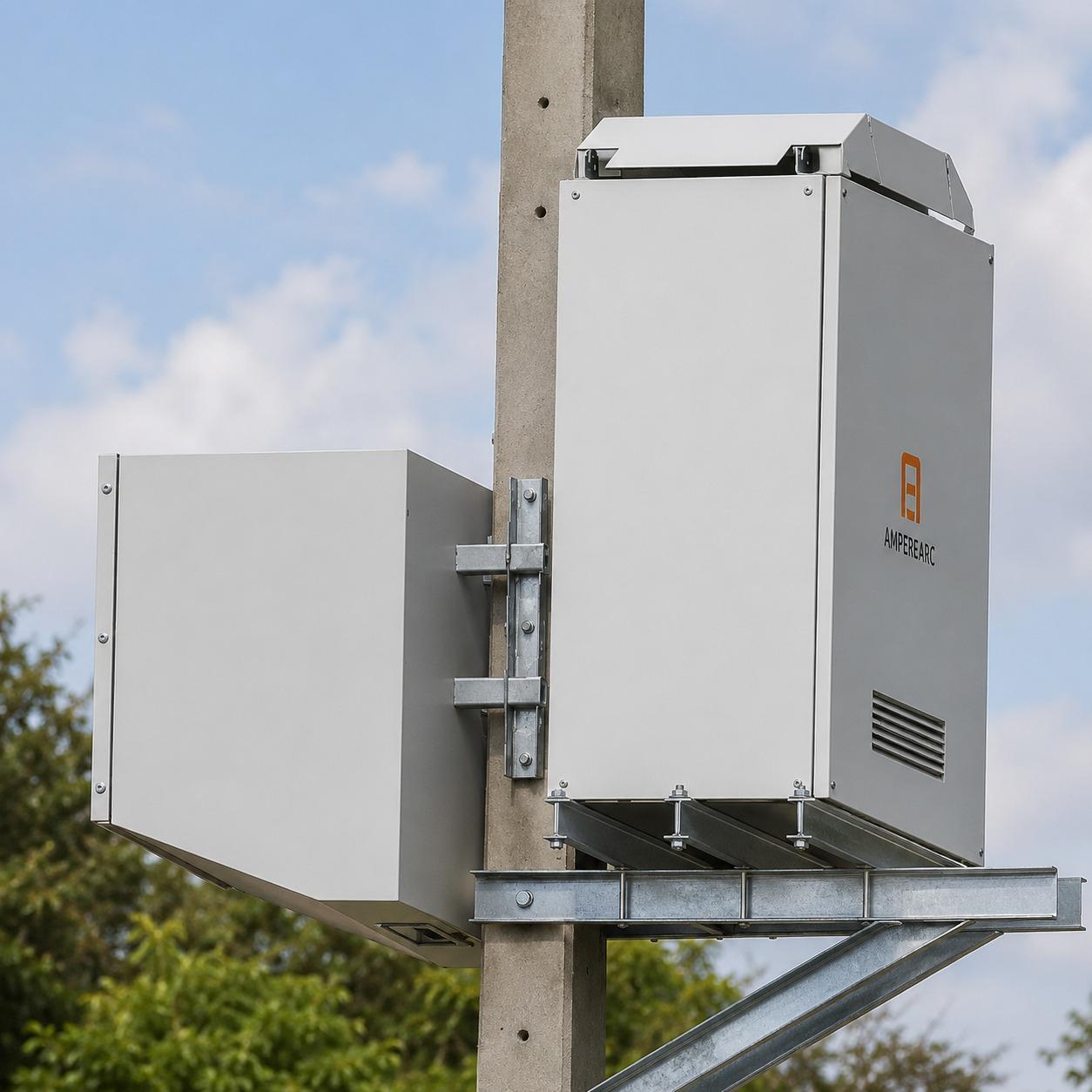
At the edge of a network the hardest part of a storage project is rarely the battery. It is the slab, the fence, the wayleave and the year it takes to agree them. This design removes all four by putting a battery cabinet and a PCS/control cabinet on a single existing concrete pole, bolted or strapped to it.
What this shape answers
There is no ground to build on, or the land costs more to lease than the equipment costs to buy.
The feeder that needs support — a peak, a voltage problem, reverse flow from solar — already has a concrete pole on it.
The unit has to be dispatched and watched remotely, from the operator's own systems rather than a site visit.
Configuration
Values are taken from the datasheet of each part named. Where a published datasheet and this page ever disagree, the datasheet is correct.
Bill of materials
Catalogue parts link to their own datasheet page. Assemblies marked built to order are manufactured against your schedule and carry no fixed SKU.
Battery cabinet and PCS/control cabinet, on one pole.
Supplied with the unit.
Built to order against the network operator's requirements.
The hardware
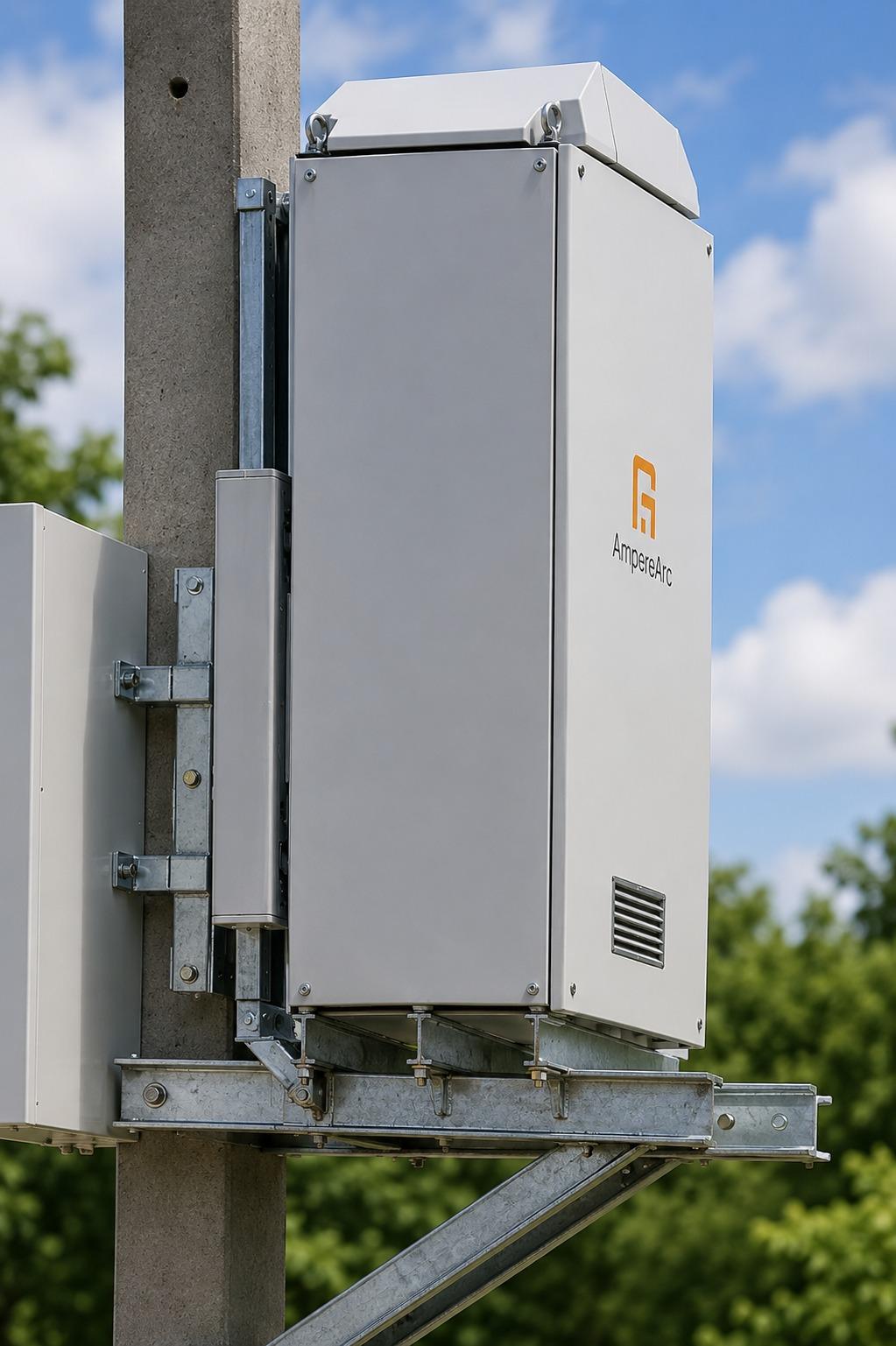
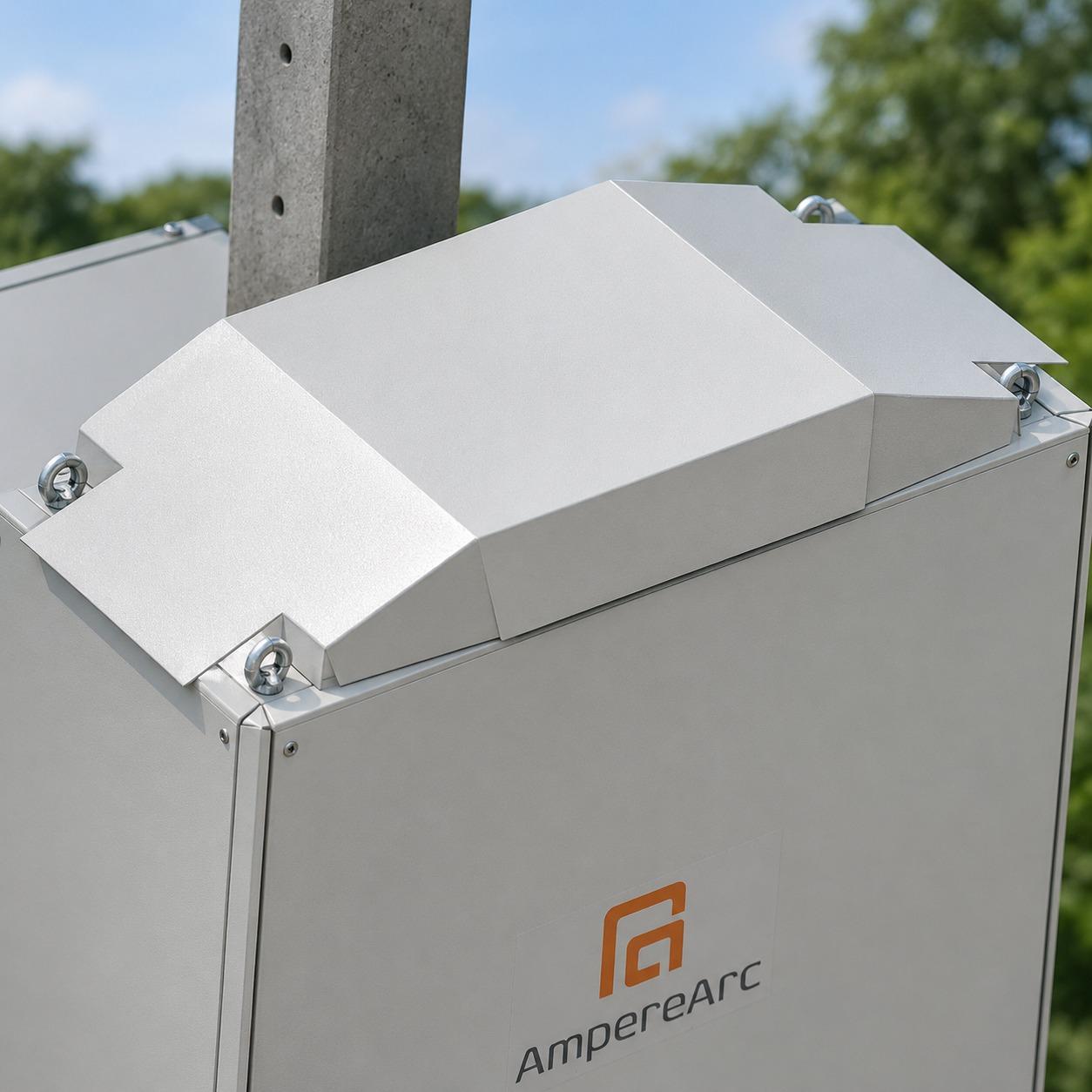
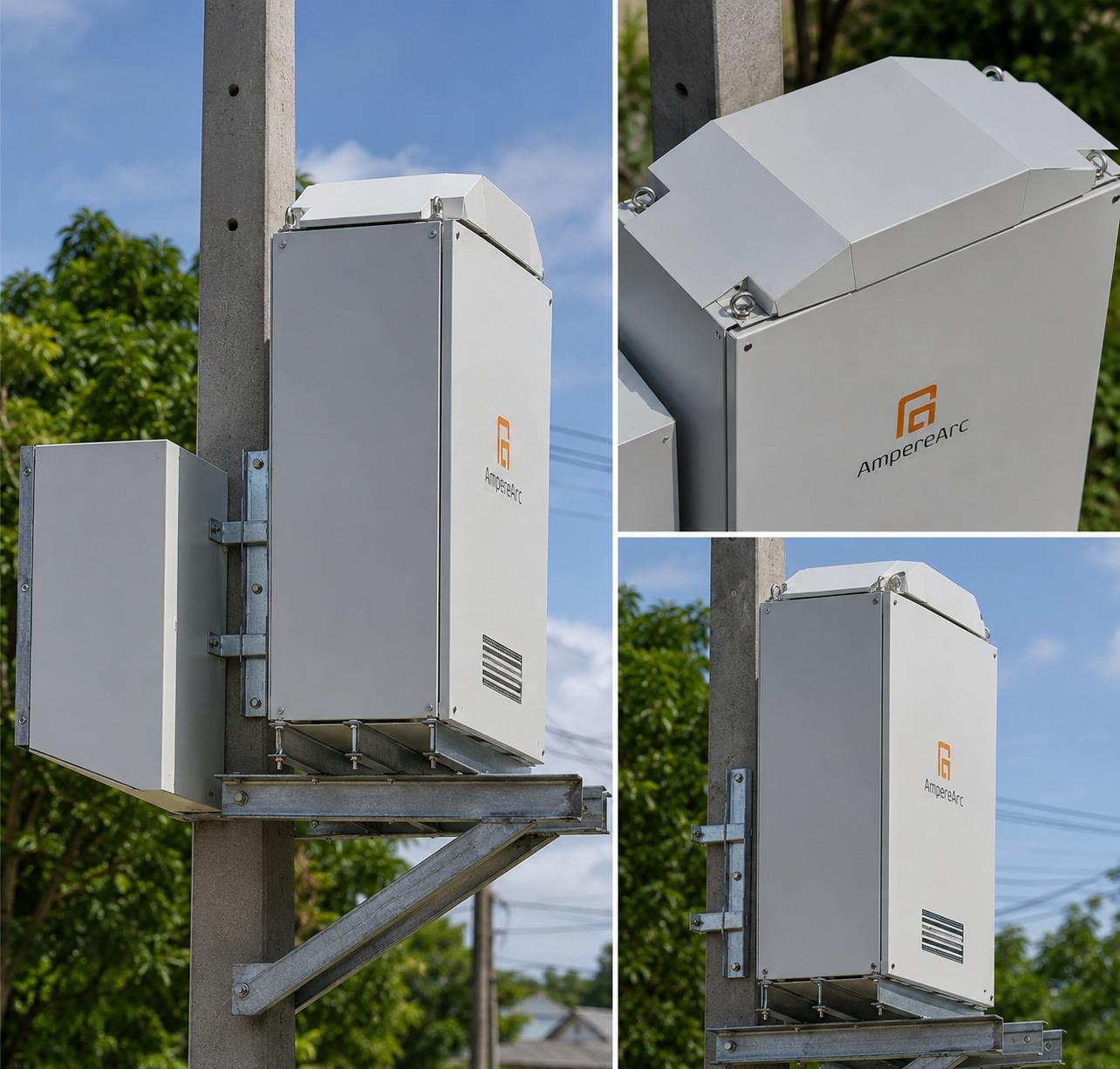
Product photography of the parts specified above. Not a photograph of an installed site.
Scope of works
Condition, loading and access measured on site. The two cabinets weigh 1,150 kg between them, and a pole that cannot carry that plus wind load is a pole we will tell you not to use.
Mounting arrangement, connection point, communications path and a fixed price, with structural sign-off where the asset owner requires it.
Connection point, protection, metering and the Volt-VAr and Volt-Watt settings agreed with whoever owns the feeder before anything is ordered.
Both cabinets fixed to the pole, connection made, then a communications check before anyone leaves the site.
Charge and discharge proved on site, then real-time monitoring over the factory-fitted cellular modem with alarms routed to whoever operates the asset.
Handover pack
Read this first
This is a reference design, not a record of delivered work. It names no client and publishes no measured outcome, because we have none to publish yet. Every quantity comes from a datasheet; nothing has been worked backwards from a claim.
Grid-forming, islanded operation is an option rather than part of the base unit, so this design stays connected to the feeder it supports. Everything above is read from the published datasheet.
Next design
A 5 kW hybrid inverter and one 5.12 kWh pack — the smallest system that still carries the evening and rides through a short cut.
Your site
Supply type, a photograph of the board and a year of meter data is enough for us to tell you which of these fits.
Request a site survey