Loading page
Loading


Manufacturer and installer
LiFePO4 storage, hybrid inverters, pole-mount batteries and built-to-order panel boards, made by AmpereArc — then surveyed, designed, installed and commissioned by the same engineers. One accountable chain from the cell to the commissioning record.
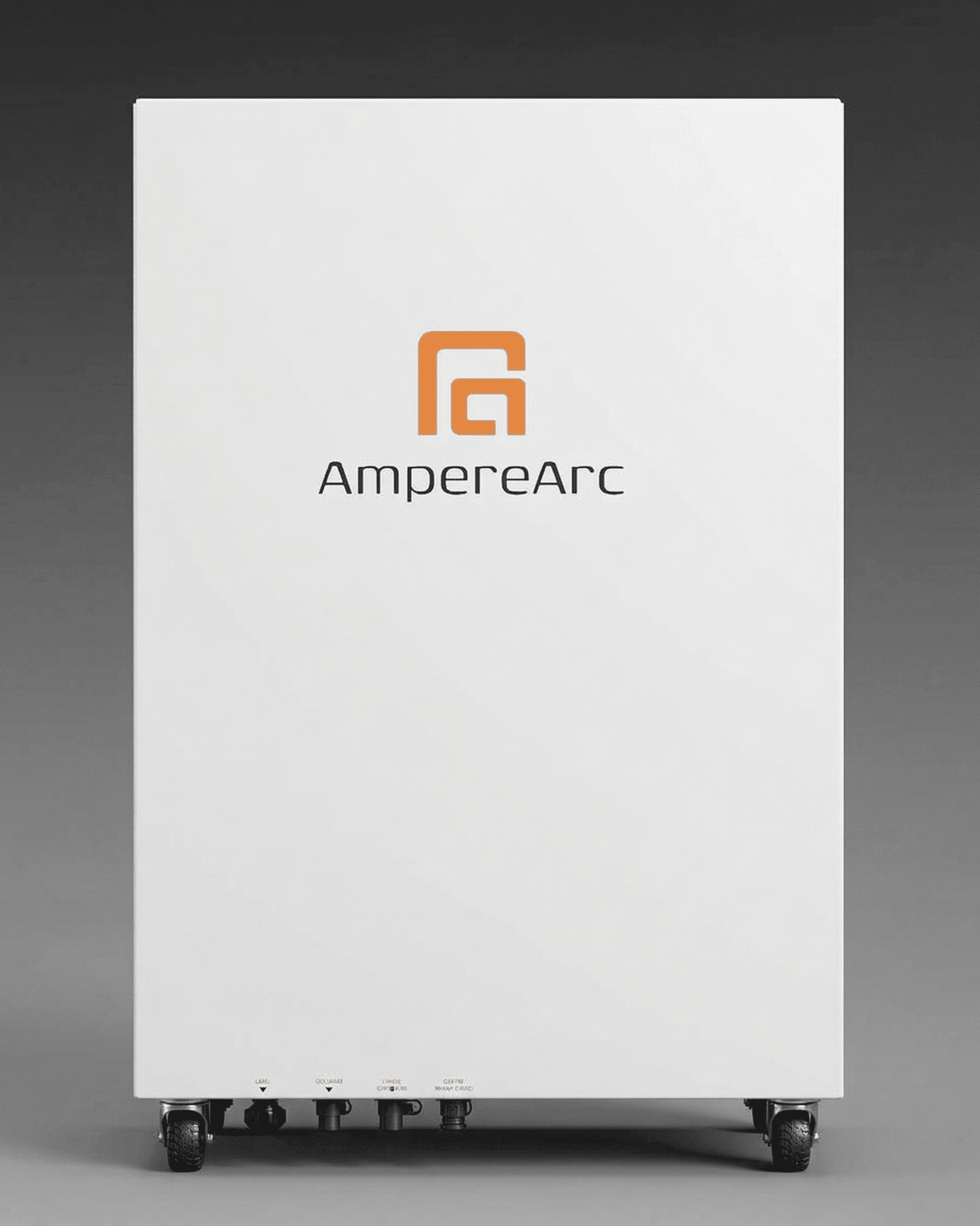
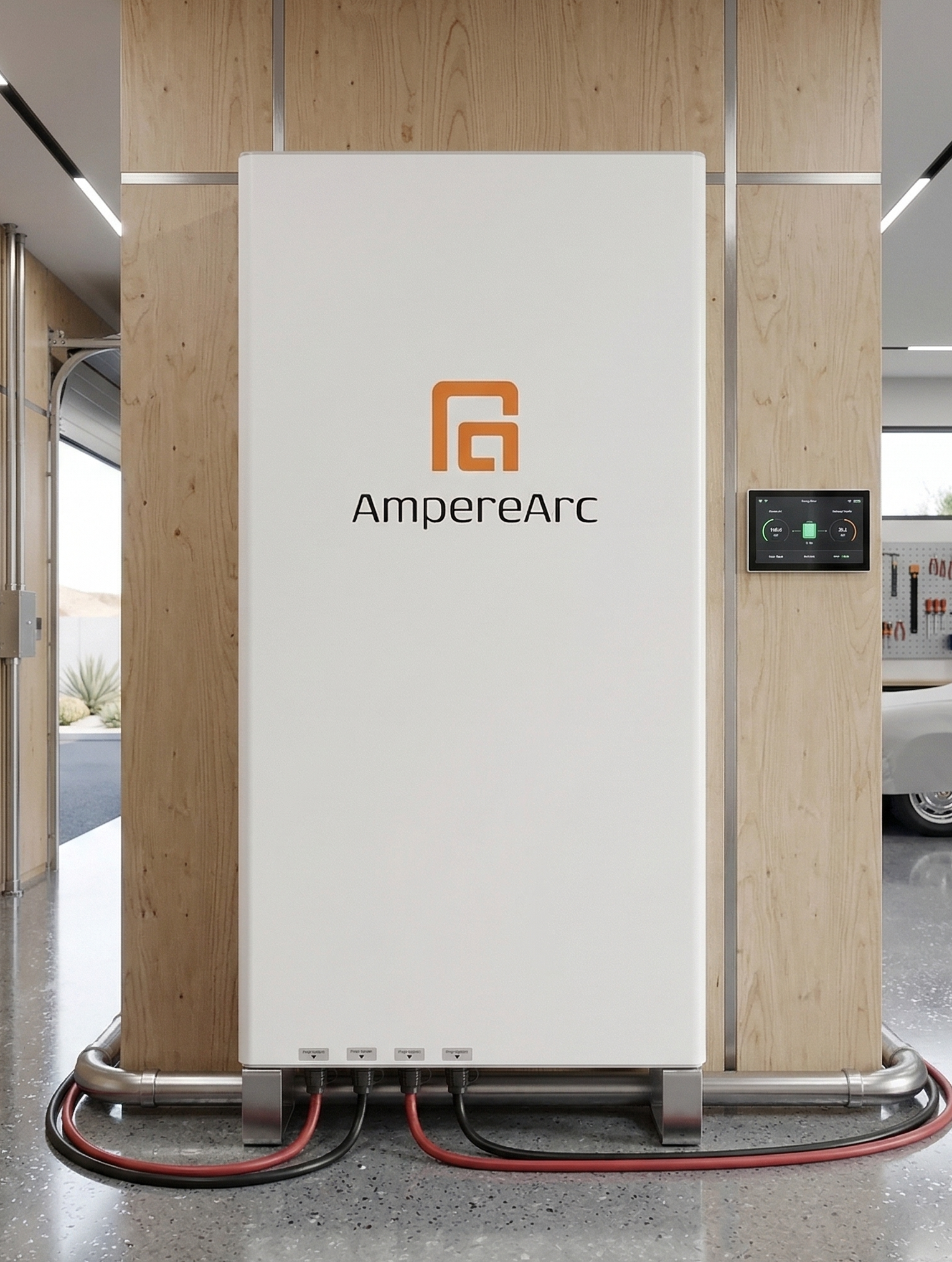
Residential LiFePO4 packs
5.12 / 16.07kWh
Cycle life, 5.12 kWh pack
6,000cycles
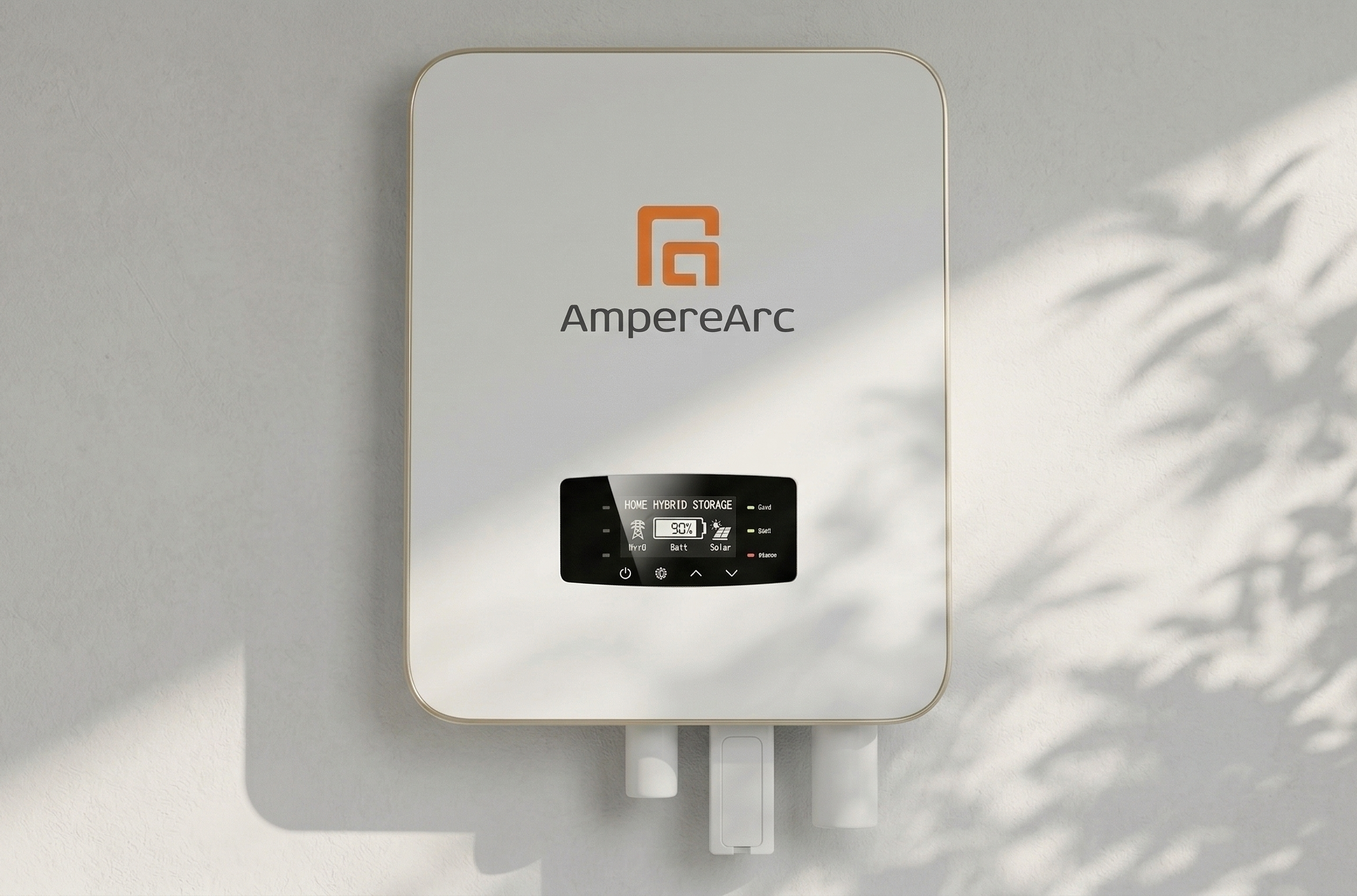
Peak efficiency, 5 kW inverter
97.5%
Grid-to-backup, 5 kW single-phase
under 16ms
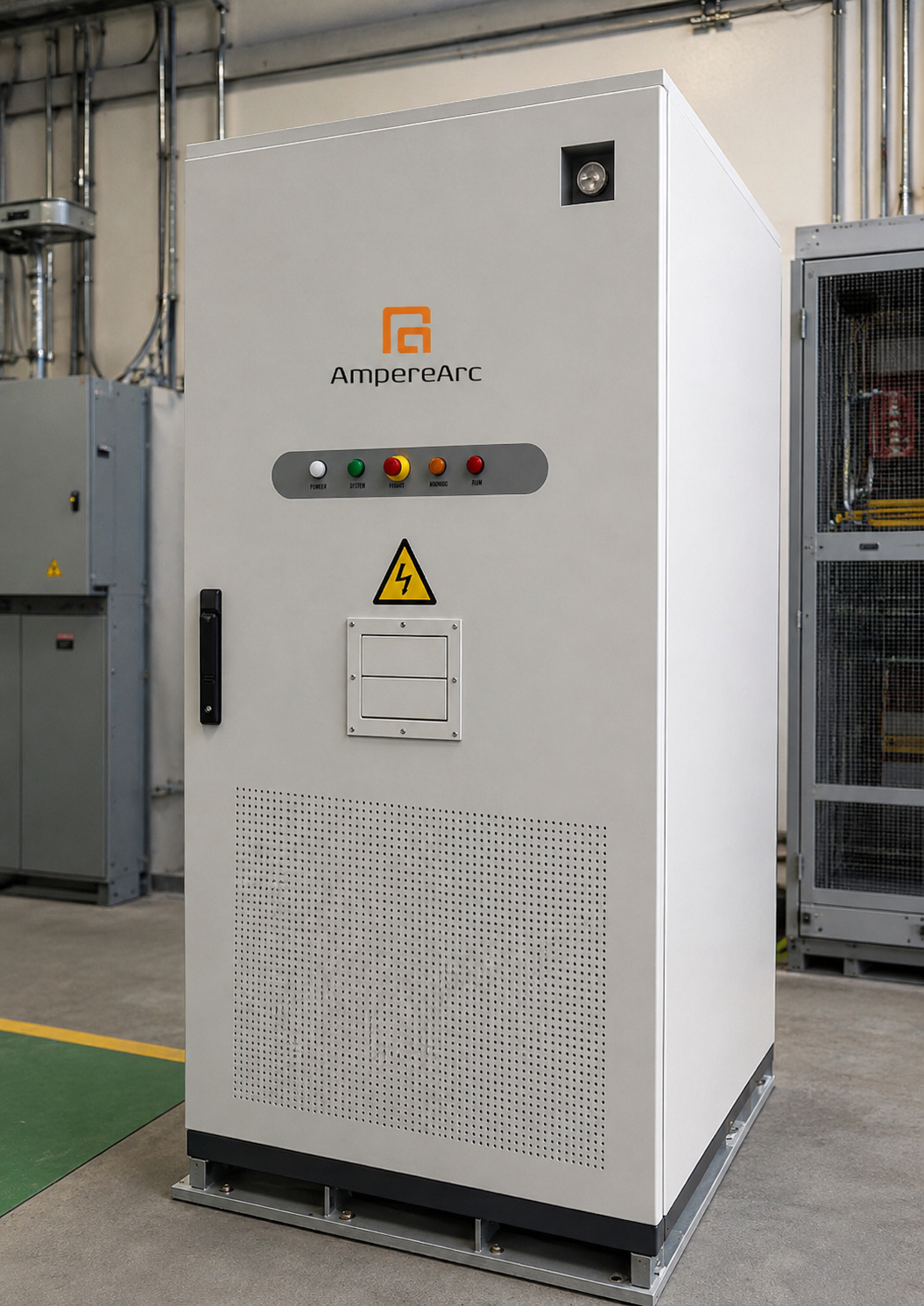
Industrial cabinet
100 kW / 125kWh
Every figure is published on the unit’s own datasheet.
What we manufacture
Cells, enclosures, power electronics and assemblies. Some of it is a catalogue unit with a datasheet; some of it is built to your schedule. All of it is ours to answer for.
The catalogue
From a 5.12 kWh wall pack to a 100 kW industrial cabinet. Every figure on these cards is read off the unit’s datasheet, and the rest of the specification is one click away.
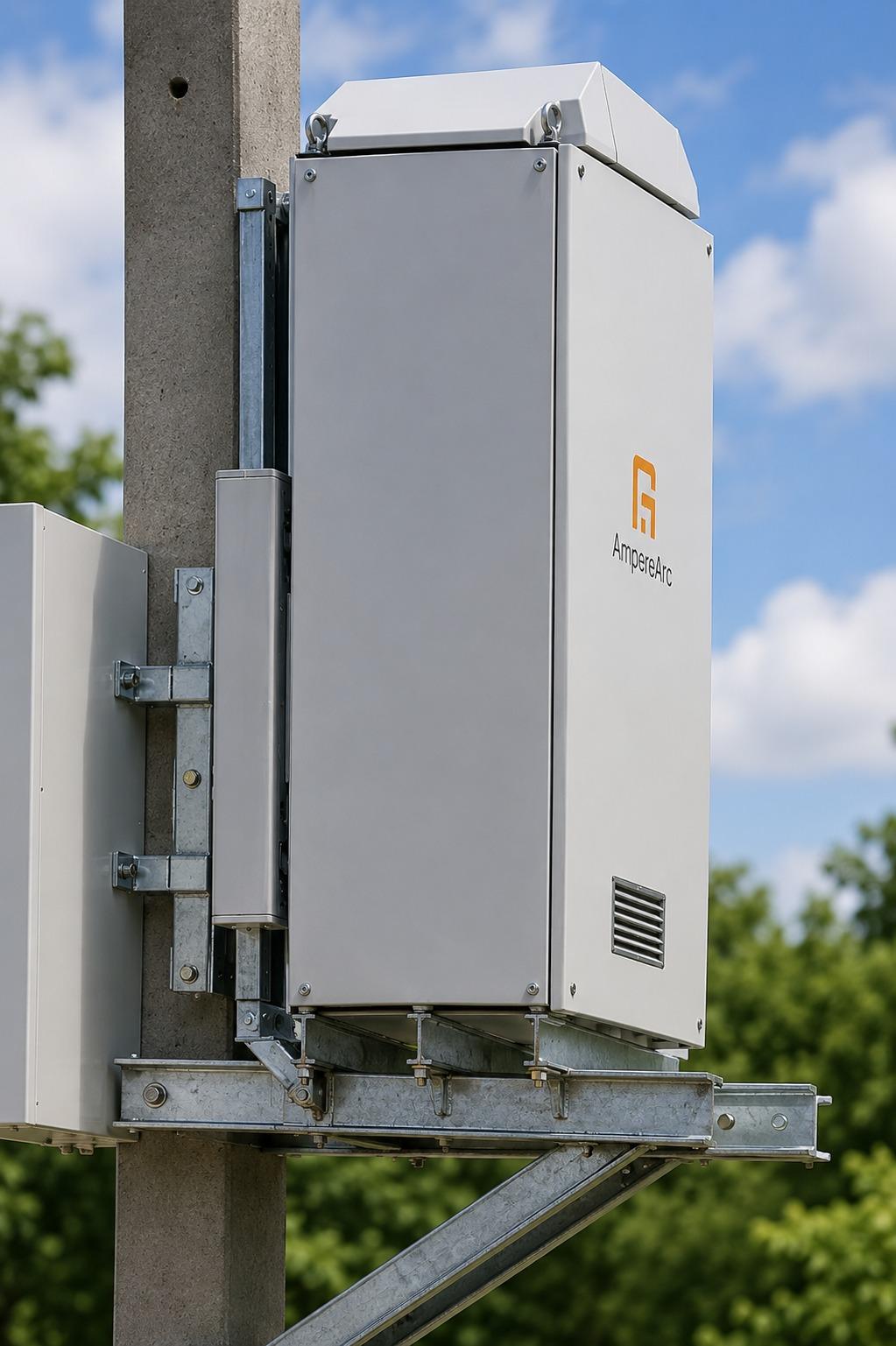
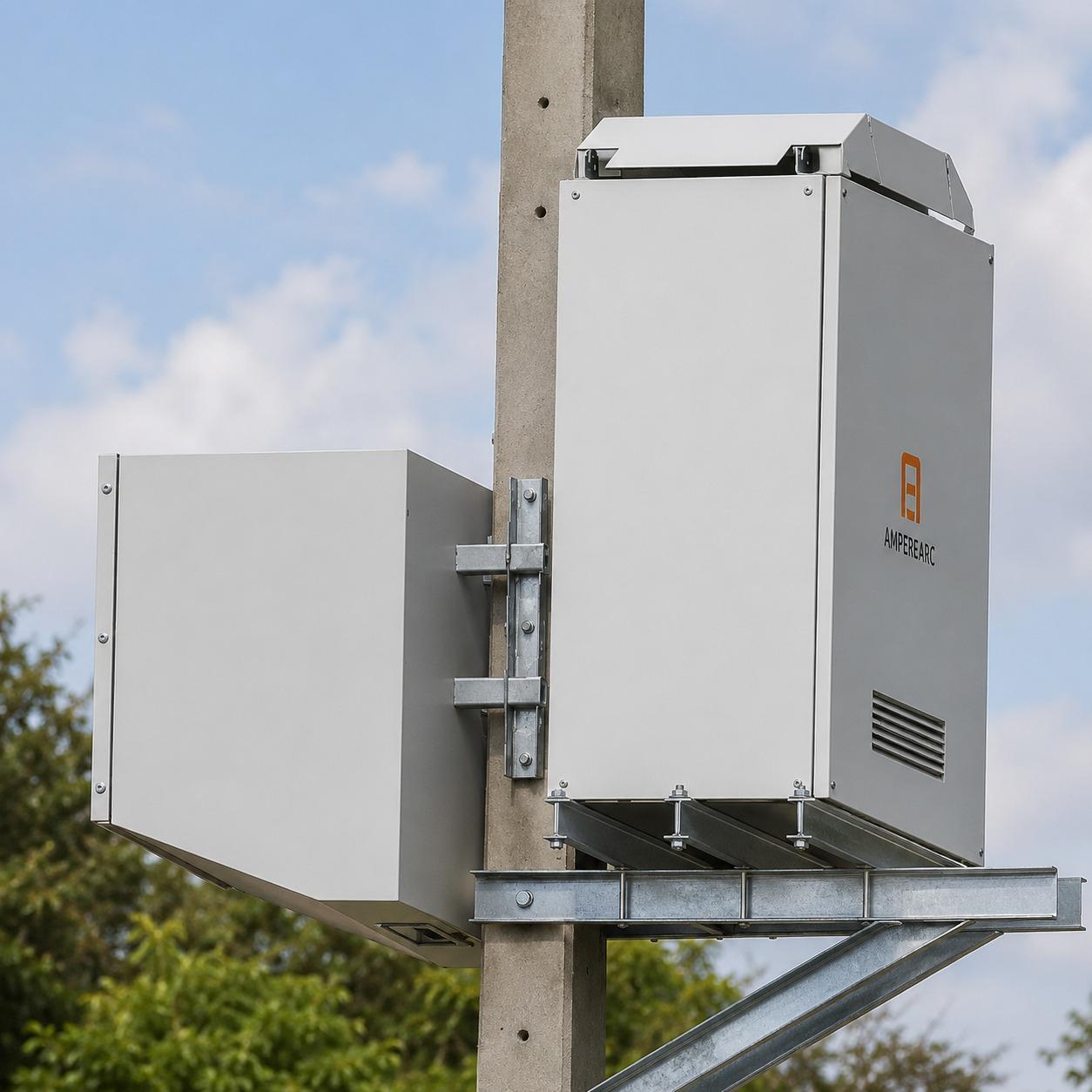
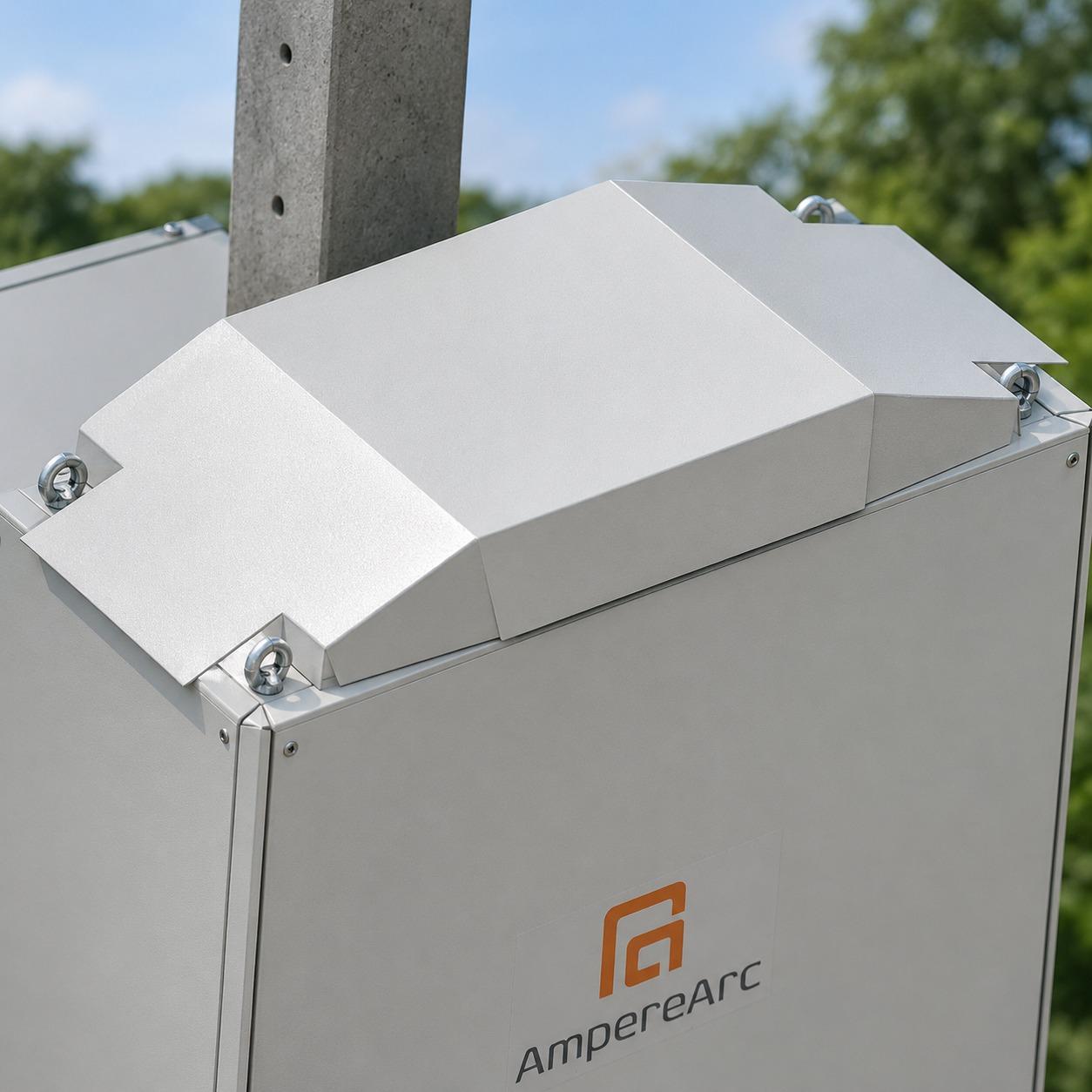
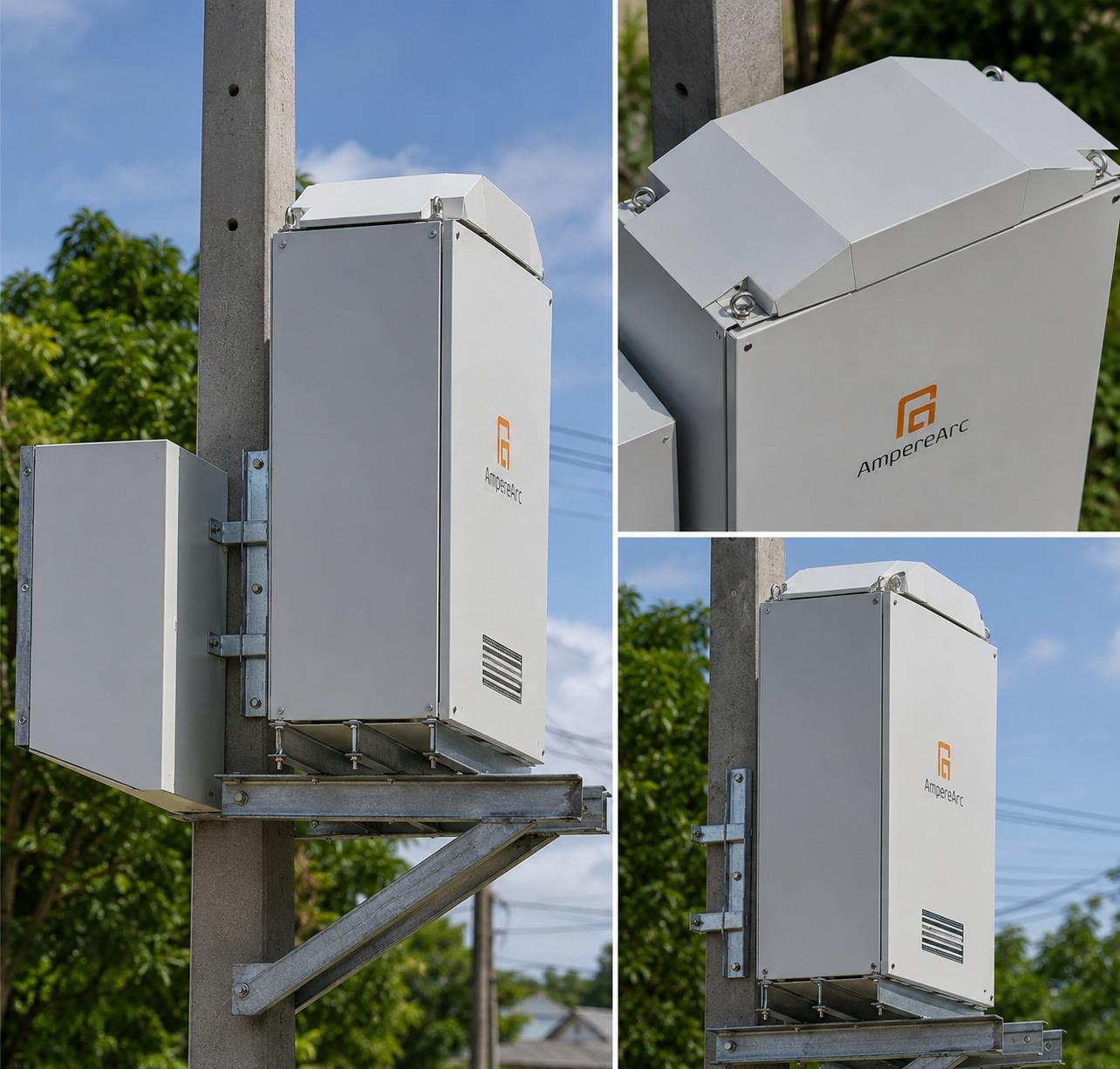
The newest line
A battery cabinet and a PCS/control cabinet bolt or strap to a concrete pole that is already standing. Nothing is excavated, nothing is fenced, and nobody negotiates a wayleave for a footprint that does not exist.
It is built for the low-voltage network: 400 V three-phase, with four-quadrant control for peak shaving, voltage support and absorbing solar before it flows back up the feeder. If you have a site in mind, we would rather design against it now.
Read from the published datasheet.
From the unit to the installation
Why we do both
We are both, so there is nobody to point at.
The cells, the battery management board, the enclosure, the containment route, the commissioning test and the paperwork that proves it — all of it belongs to the same company.
It changes the design, too. When the engineers sizing a battery are the ones who carry it up three flights and terminate it, the drawing comes out differently — and the survey happens before anybody quotes.
What we install
Power, network and automation designed together instead of three trades discovering each other on site. One containment route, one commissioning visit, one number to call when something needs changing.
How a job runs
No stage closes with a verbal update. Every one of them produces something written, and you keep all of it — including the paperwork another contractor would need to pick the job up tomorrow.
We walk the site, measure the incoming supply, log the load profile and photograph what is already there. Nobody prices a job off a floor plan and a phone call.
You receive Survey report and photographic record
Battery, inverter and protection sized against the measured consumption, drawn as a single-line diagram, and priced as an itemised bill of materials. No provisional sums.
You receive Design pack and fixed-price quote
Where the installation needs the network operator's agreement, we prepare the application, submit it and handle the correspondence until it is settled.
You receive Submitted application and operator correspondence
Our own engineers fit it, terminate it, test it and commission it — the people who drew the job are the people on site, so the drawing and the installation agree.
You receive Commissioning record and test results
Labelled schedules, as-built drawings and a walkthrough before we leave. Monitoring and a response agreement if you want one; no obligation if you do not.
You receive O&M manual, as-built drawings, credentials pack
A day on the system
Drag through the day. Solar fills the pack through the middle hours, the house draws it back down through the evening, and the grid only steps in once the pack is empty. Every figure is modelled from the unit's published datasheet, and the assumptions sit beside the chart.
Model — not measured data
One day on a 16kWh Residential Battery
Time of day
13:00
State of charge
74%
10.64 of 14.46 kWh usable
Charging from surplus
Signed against the house: above the zero line the battery is discharging and the grid is importing; below it the battery is charging and the grid is taking the surplus. State of charge is measured against usable energy, not rated capacity.
Drag across the day, or move the scrubber with the arrow keys — one arrow is an hour, Home and End are midnight to midnight.
Assumptions
A model, not measured data. The pack figures come from the datasheet — including the 7.7 kW charge and 10.2 kW discharge ceilings derived from its rated current at 51.2 V, of which the lower of pack and inverter is applied. The weather, the roof and the household do not exist: they are the assumptions above, and changing any one of them changes the curve. Round-trip loss is split evenly across charge and discharge. Solar serves the house first, then the pack, then the grid.
What the model returns
Into and out of the pack do not balance because the day does not close where it opened — it ends at 68% against 30% at midnight. No tariff is applied and no cost or saving is quoted, because neither follows from the assumptions on this page. A real site is modelled from a survey.
Estimate
Two inputs and four assumptions, all of them visible. This is arithmetic on your bill, not a reading from anyone’s installation — so treat the answer as an order of magnitude and let the survey replace it with measured numbers.
What a battery actually returns depends on your tariff, the hours you use power, and how much of the day the system can cover. Those three things need a site visit, not a slider.
The import rate on your bill.
Estimated annual reduction
$756
An estimate from the two inputs above — not a quote, not a measurement, and not a guarantee of performance.
Next step
A house that should ride through a cut. A factory paying for peak demand. A pole with no room at its base for a cabinet. Describe the site and we will tell you whether we are the right people for it — before anyone quotes you anything.
A short call
Fifteen minutes on the building, the supply, and what you need it to do.
You receive No obligation
A site survey
We measure the load profile rather than estimate it, and check what the incomer can take.
You receive Survey report
A design and a quote
A single-line diagram, the units named, and what each line of it costs.
You receive Drawn design, fixed price